
Listening (Cost No Object System)
David Sylvian, “Everything and Nothing”, Virgin:
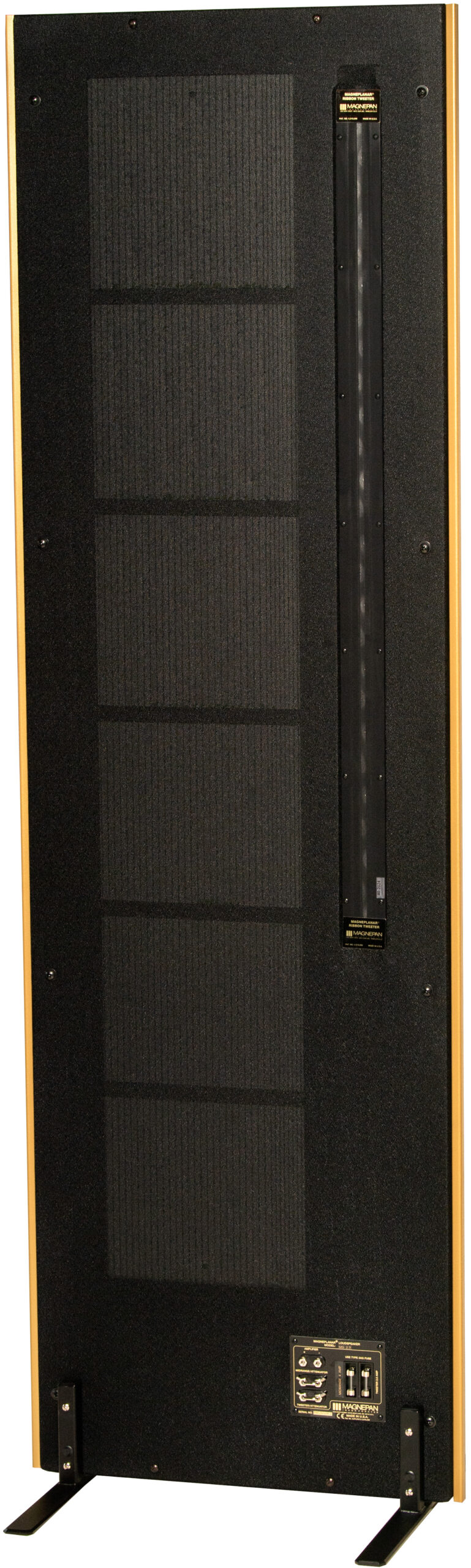
We moved the speakers into a larger room with better gear driving them, including a Linn LP 12 with the top-of-the-line Linn cartridge. I hoped to get a fuller midrange and more impactful bass. That was indeed the case. In this room, the 2.7s replaced a pair of Vandersteen 7’s, as well as a pair of the MG20.7x. The 2.7s handled themselves with aplomb, which was most impressive for their price range.
I played David Sylvian’s “Everything and Nothing” first, which I know very well. After having had the very favorable impression of the 2.7s with classical music in the other room, where I was less impressed with the electric music I played, I wanted to push the 2.7s a bit and see what they could do.
The top end remained satisfying and lovely, very open and very airy. Sylvian’s voice was really “there,” years after it had been actually recorded. There was no spit or edge to the sibilants, instead they were very natural, very appealing. In a few spots where there was only voice, I felt that I could almost see him standing in front of me.
At the same time, the bass was very satisfying. The bass drum was there to be felt. The double bass in one of the tunes had a very satisfying vibration to it and warmth. The mid-range was warmer than it had been in the smaller room. Kenny Wheeler’s trumpet was beautifully present – I’ve really not heard better. The strings in some tunes were clearly differentiated. Keyboards were fairly full-bodied, as were guitars.
“Music of Spain – Albeniz – Iberia”, Rafael Fruhbeck De Burgos. EMI ASD 570:
This is an early pressing of an EMI ASD. It is a pleasant and satisfying recording of Spanish orchestral music, including Turina and Albeniz. As with the previous classical entry, the top end was gorgeous: very open and spacious. However, I had to be careful with the volume in order to avoid a somewhat bright edge to the strings and brass. Also, I noticed a slight bit of top end surface crackle that I don’t typically hear on my system on this record. I can imagine that one would need to take some care to find the best matching components for the 2.7s, although I should emphasize that this was not particularly intrusive; just a by-product of the very open top end.
As before, instrumental placement in the orchestra was excellent, provoking at times an almost visual image. Once the volume was properly adjusted, the strings played with what I want to describe as a sweetness and ease that was truly a listening pleasure, very like the real thing – nothing phony about it. The lower mid-range was certainly in place, though – at least with this record – I could have used a little more bottom. However, the early EMIs can be that way.
John Coltrane Quartet, “Ballads”, Acoustic Sounds re-issue of Impulse Stereo AS-32:
This version of Coltrane’s “Ballads” sounds exceptionally good. I reduced the volume a second time in this session, and again noticed a distinct improvement in the sound, from a slight stridency to a relaxed ease. Coltrane’s sax is out front in the left channel on this recording, which can sound somewhat unnatural. It worked pretty well here, although was still somewhat overpowering the rest of the band. The bass has never been loud enough, and that was true here. The piano can also sound slightly nasal, as it often does in 60’s Impulse recordings.
In other words, the 2.7s spoke the truth about the imperfections of the recording. However, that did not mean that I couldn’t get lost in the music, as I almost always have. There were moments of gorgeous realism in the sax. The accompaniment works fine; it is just not the focus of this record in any event. Although it is in this area – the blend – that I have heard better.
Manuel De Falla, “Nights in the Gardens of Spain”, Gonzalo Soriano EMI ASD 545:
From the moment the piano entered into the picture, it was clear that this was a great record/speaker match. With this record, what I want is atmosphere. And here I had it, particularly (as usual) in the air at the top of and around the instruments. Similarly in the dynamics, as much of the piece is in the mysterious quiet of night, with delicacy in the attacks and the micro-dynamics.
The piano, even though a complex and full-range instrument, was fully present and scintillating as was the tympani, though rarely used, and the low brass, especially the solo trombone toward the end of the first movement. As before, this was a remarkable performance for such a (relatively) inexpensive speaker.
Conclusion
Curiosity compelled me to listen to several of the records used in the Magnepan session at my home the evening after. It was during that listening that I realized pretty quickly that the strength of the 2.7i’s is in the ribbon tweeter. The top end affects all of the other parts of the story when listening to recorded music. The ribbon tweeters performed superbly throughout, passing on a great deal of information from the recordings to which I was listening.
What I heard in my own system from the same records was quite similar on the top, but noticeably more detail in the mids, lower mids, and bass. And for heaven’s sakes, there should be. I am listening to quite large dynamic horn speakers backed up by a stack of subwoofers on each side. They are taller than me, weigh many multiples thereof, and cost approximately thirty times more than the Maggies.
That the 2.7i’s gave me quite a bit of listening pleasure at a very nice price is quite a testament to the design choices Magnepan made. With the excellent ribbon tweeters, they open up a world of presence that is quite palpable, bringing a sense of the real world to recordings made years ago – or relatively recently – that is seductive to the ear. If the lower end detail and the impact of the bass is less than one might find in much larger and more costly speakers, so be it…the music, and its fulfilling aspects, are still largely there for the ear.
So, if I were putting together a system for which I had a speaker budget in the $6000 range, I would give serious consideration to the 2.7i’s. If I had $3000 more, I would give a serious listen to the $10,000 2.7x which has a much upgraded crossover and wiring which yields significant gains in all areas, but most particularly resolution. I would, however, also consider how I drove them, and where I placed them. I think warmer sounding gear – perhaps vacuum tube based – would be a potentially good match. As to room shape and size, that would likely involve some trial and error.
One’s main listening focus would also be an issue. Thundering bass is not going to come from these speakers – although good subwoofers could fill in. I think that more of a jazz and classical orientation – especially with an emphasis on voice perhaps – would be more ideal.
In any event, the 2.7i’s provide some real pleasure in a modest price range. A very nice listening experience.
- ← Previous page
- (Page 3 of 3)





Guys a very thorough review. Thank you for taking your time to review and write up your impressions.
wishing you both all the best.
Charlie