
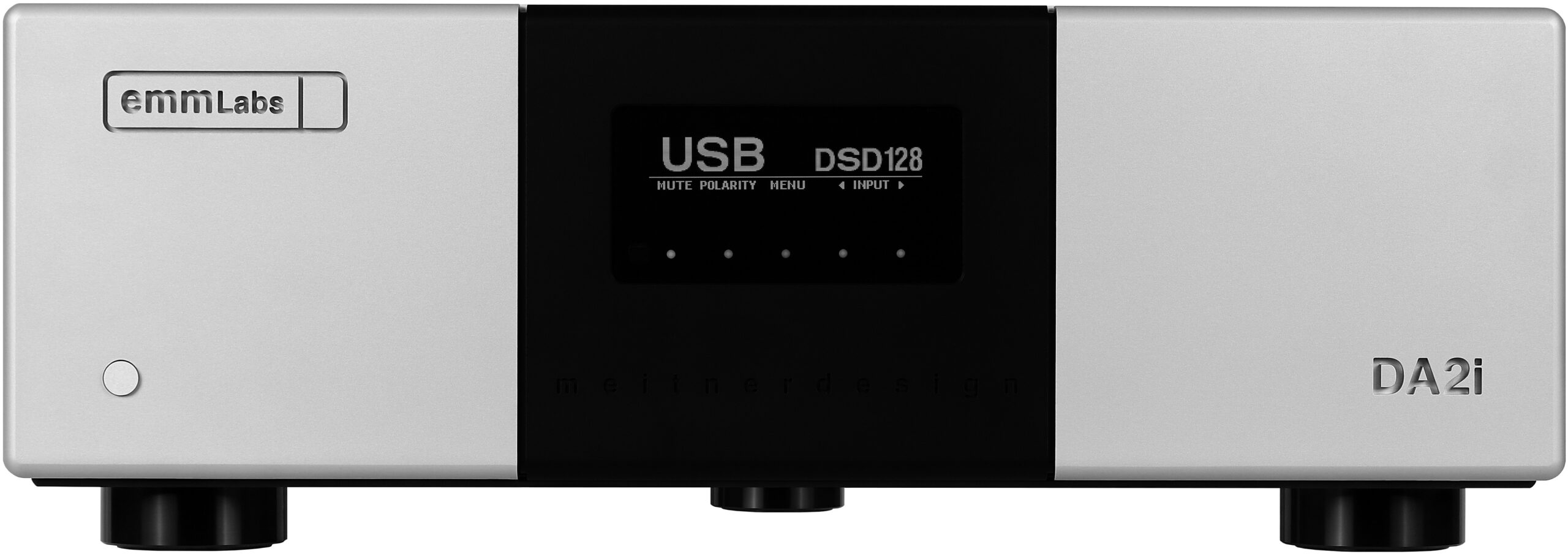
Listening (SACD)
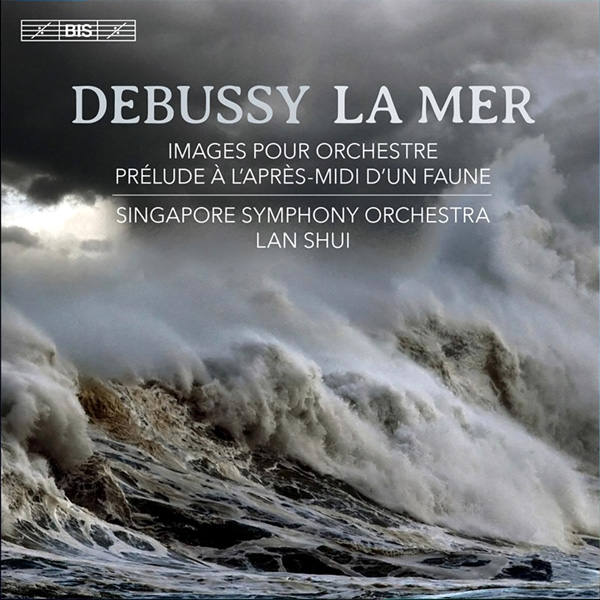
Debussy, “Images” Lan Shui/Singapore Symphony Orchestra, BIS
I read a review recently – I believe in Fanfare (it was not an equipment review) – in which the reviewer opined that SACD’s were, to him, the best source of reproduced sound. For digital recordings of classical music, I would be inclined to (generally) agree. The DA2i fully affirms this view for me. In listening to Lan Shui’s performance of Debussy’s “Images” on BIS, my ears are happily refreshed by a very transparent and relaxed aural view into the workings of an excellent orchestra playing some great music.
Reviewers, me included, use the term “relaxed” from time-to-time as if the world understood what they meant by that. Yet it’s quite hard to actually describe – even though I feel as if I know what I mean when I say that the SACD presentation is “relaxed.” Hearing this same recording on Redbook CD would typically lead to some amount of aural fatigue. There is some edginess and compression that the ears have to listen around that does not occur with the best SACDs on the best players. What I hear in this particular SACD is the instruments, fully rounded and in their own space, easily identifiable, and in the context of a fairly well-defined concert hall or other recording space. Indeed, I can at times sense the rear wall of that space. And my ears don’t get tired, not any more than they would at 100+ decibels of a real orchestra blasting out at me while I sit in row 10 or 12 (where I like to sit). The thrump of the plucked cellos, the thump of the bass drum, the mixed mass of strings to my left…it really is remarkable.
As noted, Ed Meitner has been involved in DSD from early on, so it’s hardly surprising that his deck would handle SACD so masterfully. The original DA2 did a great job with SACD. The DA2i, to my ears, comes a step further.
After the BIS version of Images, my curiosity was aroused, and I put on the RCA SACD of Charles Munch doing the same piece with Boston, but recorded almost 60 years before. The SACD comes from a short series of SACD reissues RCA did around 2005-06 of these early RCA treasures. Two CD versions of the same recording are described above.
I almost laughed as I considered how well Munch’s early 60’s recording compared with the 2015 BIS recording. Munch’s version is more direct and to the point; some would find it more satisfactory. (I like both.) And the orchestral sound is different. The orchestra employs a somewhat more thickly textured vibrato in the strings, which is presented more up front than in the BIS recording. Some would describe the result as warmer. The strings on the RCA are gorgeous, scintillating. I can still hear what sounds like the rear of the hall. And most importantly, I have the sense of relaxation, as described with respect to the BIS recording. I feel like I could listen to these discs all evening and not get fatigued.
I know the Munch Images LP pretty well. This raises the question, which would I rather listen to: the SACD or the LP? As I was listening to the SACD, I did not miss the LP. Someday I’ll compare them. But for now, I like the SACD on the DA2i just fine. And no surface noise! More so, I’ve got a large stack of other SACD’s I want to hear.
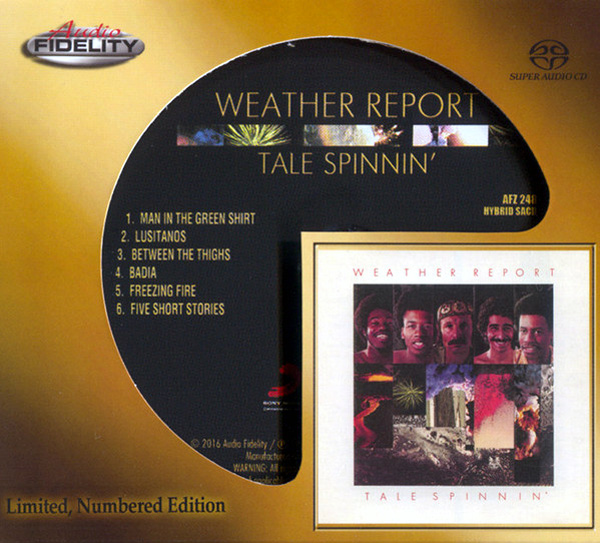
Weather Report, “Tale Spinnin’”, Audio Fidelity SACD Gold
One of them is Weather Report’s Tale Spinnin’. I used the LP of the same recording (in its Speakers Corner version) recently in another review. It’s a fine recording and has some very deep bass to enjoy.
On the DA2i, the deep bass in the first two cuts came across superbly. The images were spread across the soundstage as wide as the room could handle them. The bass drum may have had more punch on the LP. And occasionally, Zawinul’s synth came across with a bit more edge than I recall from the LP. Or maybe not. The musical experience overall is very effective. I think this is an underrated record. The SACD presents it superbly. Again, I did not find myself wishing for the LP. This gave me what I needed without fatigue.

Frank Martin, “Concertos, Jan Stoer”, Orchestor Musik Collegium Winterthur, MDG
I’ve had this recording on CD for some time. Recently, I found a copy on SACD and picked it up. I’m glad I did, because the DA2i does a terrific job of presenting it in as musical a fashion as I could ask. This concerto for seven instruments, almost a chamber piece in many spots, allows for a rewarding intimacy with various solo instruments. There is an active solo timpani part as well.
As with the Debussy, the winds sound full and rounded. The timpani are gutsy and impactful without being exaggerated. The small string section is warm and feathery. As before, there is lots of space and air.
Conclusions
The first thing that you notice with the DA2i, particularly with SACD’s, is the huge sound space that it creates, coupled with the increased air around instruments and sharper focus. A close second is the lowering of perceived noise and a concomitant increase in resolution, particularly at the soft end of the spectrum. Bass is not exactly bigger, but it is cleaner, and in particular, more visceral. This is especially true with upright basses. Their warmth, and the uniqueness of their tone, comes through in an aurally attractive way.
You also got a sense of being able to hear the space around the bass – indeed, all of the instruments – in a way or to a leveI that I had not heard before in digital. This allowed for better placement and depth and a better ability to separate individual instruments from the mix. Of course, all of this was dependent on the recording, remastering, etc.
The DA2i is an absolutely stunning achievement! I really want to say that makes Redbook digital sound as attractive as analog, and some Redbook CDs sound really nice. But there is a limit to what can be done with Redbook. I am particularly sensitive to the harder transients that digital, particularly via Redbooks, can produce. That’s why I usually like SACDs, which seem to me more relaxed, as discussed. And Ed has done an amazing job of figuring out ways to get an enormous amount of attractive sound out of Redbook CDs. But I recognize that there are limits.
In summing up, the DA2i was able, without sacrificing the tonal rightness for which EMM has become known, to significantly improve resolution, body, solidity and dimensionality without loss of either speed or detail. While I cannot say that there was more bass, the bass projected much better and seemed better controlled and to go deeper. Dynamics were also better and the congestion which can often accompany complex passages (particularly when they are loud) is either gone or much reduced.
I asked Ed what he thought was the most significant area of improvement and he said, “the bass”. Initially I disagreed, because it seemed to me, that it was in the rather audible lowering of the noise floor and the concomitant increase particularly in low level detail. I clearly was hearing information that I had previously missed. In turn, that information has a significant impact on other aspects of the sound such as image placement and the ability to hear the back and side walls. However, Ed was quick to explain that when you get the bass “right”, everything else follows.
I purchased the DA2i and recommend that if you are in the market for a D/A converter in this price range or higher, you make a point to audition this unit before deciding to spend more. For existing owners of the DA2, an update program is available.
- ← Previous page
- (Page 3 of 3)





How would you compare the sound of the EMM DA 2i to the Bricasti M21? Also, considering the Bricasti is 1/2 the cost, is the EMM that much better for price differential?