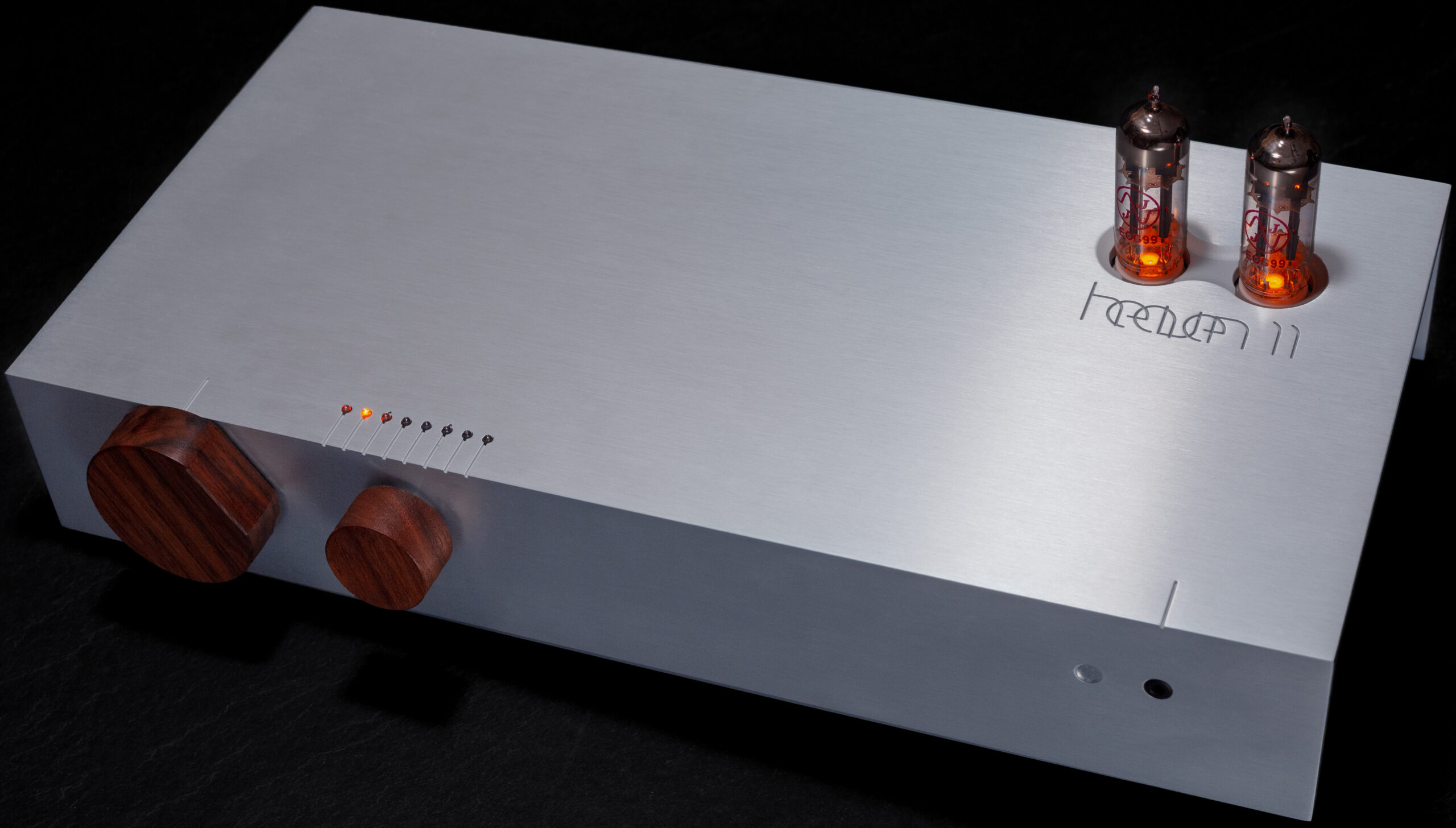
Rarely have I heard such a formidable change to any component which has been upgraded in the field! I assign first place to the Mk3 as sporting the most prodigious change of any component I have tweaked in the field! I have used discrete opamps, swapped tubes, changed resistors, internal wires, and capacitors on speakers, and none of those changes equaled the seismic shift that occurred when switching between the stock headphone amp module and the Performance Headphone Module – and that result as heard through an old, budget set of headphones! Consider yourself to have squandered a golden $150 opportunity if you fail to acquire the Performance Headphone Module.
About Itai Azerod and Heaven 11’s design philosophy
I spoke a bit about Heaven 11’s design team in the review of the Mk2, but a brief discussion here is suitable. Itai brings evident strength to the project due to his background in product design. He pulls a product toward the user’s interests, not merely the component designer’s interests. Study the feature set of the Mk2 and Mk3, and you will note several pleasant features that enhance use and allow them to be integrated into modern systems.
A key to keeping these integrated amps affordable is the decision to use a bit older electronic parts, specifically not cutting-edge DAC chips or class D amp modules. Heaven 11 is tuning the well-received and much less expensive ones, with spectacular results! Frankly, Heaven 11’s team is getting phenomenal sound out of older DAC chips and class D modules, which calls into question other makers’ designs that myopically focus on specs. While they seek to measure better than competitors, Heaven 11’s team is making a budget priced integrated amp with tubes, which may not be more linear than the others, but simply sounds better! The Billie Amp has what enthusiasts call a musical character and is precise enough that it seems to bring the listener closer to the intent of the artist.
The optional dual DAC configuration is a good move by Heaven 11. The ESS ES9039PRO DAC (384kHz/32-bit, DSD 256) in the Mk3 is more advanced than the ES9018K2M Sabre 2 Reference DAC (192kHz/32-bit) used in the Mk2. As I had two of the Mk2 and two of the Mk3 on hand, it was easy to conduct a direct comparison. My musical selections for the comparison were “Faces of the Heart” by Dave Koz, “Gospel Train” by Front Country, “Blue Sky in Your Head” by Lighthouse Family, “Let It Die” by the Amalgamates on Voices Only 2010 College a Capella (disc 2), and “Joy” by Katie Melua.
Using the above play list, I listened first to the Mk2, then the Mk3. In every parameter of performance, the Mk3 excelled. The Mk3 steps ahead nicely in resolution and tonal richness. When heard side by side, the Mk3 has a more upscale, mature sound than its predecessor. It retains the sweetness of the Mk2 but has a bit more brawn. Compared to the Mk2, the stock Mk3 can resolve more information across the frequency spectrum, create more sense of air around instruments, has better transients, and pushes the soundstage deeper than the Mk2, which means more pleasing listening.
I then turned to comparison of the Mk3, one unit containing the Standard DAC and the other with the Performance DAC. Simply put, do not mishandle your money by skipping the Performance DAC Module upgrade! That necessitates purchase of the Mk3 Classic version which costs $200 more. Spend it. The additional $350 cost for the Performance DAC Module is negligible for the sea change in performance. The stock DAC board did not reside long inside the Mk3, perhaps 1 hour. I forced myself not to pull it out before an hour of listening had passed. It took me much less than an hour, closer to two minutes, to firmly conclude that the Performance DAC Module is the route to go for the serious audiophile. I would not consider for a moment opting for the stock single DAC. As two of the modules were sent to me, I had the pleasure of upgrading both Mk3 units, which doubled their magic. The curious reader will enjoy knowing that I have done the same system configuration with the PS Audio Stellar Strata Integrated Amplifier; I own two units and employ their four DACs for stereo listening. It is a game changer for both products.
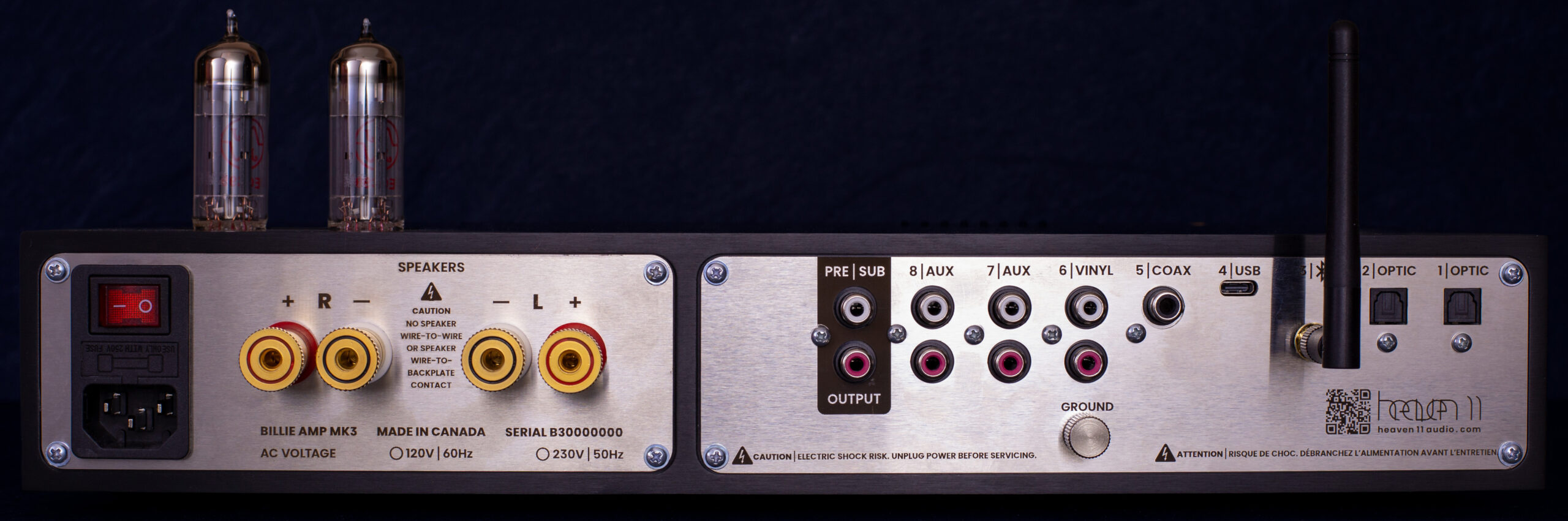
The Performance DAC Module is an example of my principle about audio systems that increased resolution and information retrieval is never a problem. The proof is that the Performance DAC simply doubles the ESS ES9039PRO, so it’s timbral character is identical to the single Standard DAC. The doubled Performance DAC transforms the Mk3 into a monster, a home run product. You would be hard pressed to get more value from any other $350 upgrade to an integrated amplifier. Note: I wrote that before I compared the stock headphone module to the Performance Headphone Module. Shockingly, the Performance Headphone Module conferred an even greater change!
I always want more processing power in the DACs I use. My philosophy of system building is that one can never have too much precision. I can work with tonality several ways, but higher precision and refinement are always a benefit. The extra cost for the Performance DAC relative to the performance improvement is marginal, and I recommend it. The Performance DAC takes the Mk3 one big step further in advancing coveted characteristics of great sound. Some manufacturers would charge $3-5K for such a performance improvement. If the only improvement to the Mk3 was the upgraded Performance DAC, it would be worth it.
A significant advantage of the Mk3 is that it can play16 bit 44.1 kHz MQA files, whereas the Mk2 cannot. There was a playback oddity regarding 24 bit, 192kHz files; neither of the M3 units would play them. Itai thought that perhaps a firmware update would resolve it, but they continued to be silent when I attempted to play back 24/192 files. All other iterations of files up to that point played flawlessly through both the coaxial digital (SPDIF) and optical (Toslink) inputs. This seemed a mystery, since Itai used the same Mk3 architecture at a show the very weekend we discussed it, and that unit performed flawlessly with such files.
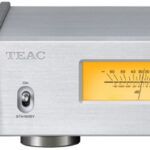
I could not resolve it completely, and I suspect it had something to do with the TEAC VRDS-701 Preamp/DAC/CD Player and CG-10M-X Word Clock in the system. Both the Mk2 and Mk3 reacted differently when the TEAC components were in the chain versus when they were removed and I used the PS Audio AirLens alone as the digital source. I could not isolate one of the several settings for digital signal treatment or output of the VRDS-701 that would yield perfect playback of all files by the Mk3.
When I adjusted the bit rate and frequency limit for Tidal and Qobuz to the Redbook standard, 16/44.1, the Mk3 played everything in my collection of digital tunes flawlessly. I am not terribly concerned about this anomaly, as I have had other DACs which were unable to play files due to such things as a digital cable or an upstream digital source. The performance of the Mk3 is so strong in general that even if all tracks played on it were limited to 16/44.1, it might prevail against an integrated amp that could play files having higher bit rate and frequency.
ICEpower versus Hypex
I had ordered the Mk2 with the ICEpower module, partly because I previously reviewed the Legacy Audio i.V4 Ultra Amplifier and am familiar with the sound of the ICEpower class D amp. I figured that building systems with both the Legacy and the Heaven 11 Mk2 would be close to an apples-to-apples comparison. Indeed, the tonal character of the two products was close, much closer than when comparing more dissimilar amps. The chief benefit of the i.V4 Ultra was more power (600wpc into 8 Ohms and nearly 1,000wpc into 4 Ohms). Speakers like the Kingsound King III electrostatic were boosted in macrodynamic capacity by the Legacy amp. When the tonal character of the system of separates used with the i.V4 Ultra pleased, it came out on top. However, whenever there was a track that had an unpleasant tonal character, I pined for the twin Billie Amp Mk2 system. There is no getting around the game changing nature of the tonal adjustment feature of horizontally bi-amped integrated amps. Unless you are using a preamp with remote bass, mid, and treble controls, you are stuck with what the system provides. With a pair of horizontally bi-amped integrated amps, you control instantly what the system provides tonally.
The Mk3 offers the option of the Hypex NC252MP (150wpc into 8 Ohms and 250wpc into 4 Ohms), or the ICEpower 200AS2 (120wpc into 8 Ohms, and 215wpc into 4 Ohms) which was used in the Mk2. Itai described the ICEpower build as more romantic and the Hypex build as sporty or detail-oriented, and they are apt descriptions. One aspect of use in comparison to which I wished to pay close attention was whether the Mk3 would drive less efficient speakers like my Kingsound King III electrostatic speakers better than the Mk2. Such speakers benefit from more robust power. I found that the Mk3 did drive the King III, and my other speakers as well, with more authority, chiefly improved headroom and sound staging.
- ← Previous page
- (Page 2 of 3)
- Next page →