Tracks:
Talk about Wagner, and the luxurious tone of his compositions is overriding and simply irrepressible. Of all the orchestral recordings of the maestro’s work, the 1984 Deutsche Grammophon release of Wagner – Karajan, orchestral suites of the Ring Cycle operas played by the Berlin Philharmonic and conducted by Herbert von Karajan and the 1982 Decca release of Wagner: Der Ring des Nibelungen (orchestral excerpts), by the Vienna Philharmonic Orchestra, conducted by Sir Georg Solti, persist throughout the decades as my reference, CDs and LPs, so much so that I still have one last LP of each sealed, waiting to see the light of day when my present copies finish their run. A recent surprise is the Bruckner cycle with the Gewandhaus Orchestra, conducted by Andris Nelsons, released in 2022 and also by DG, recordings of which are supplemented with ten excellent Wagner Ring Cycle orchestral excerpts no less.
Don’t get me bored with the three-day feat of operatic processions because while opera fans love it, I’d rather not see it lest the orchestral editions end up trivialized afterwards. I cannot recount enough instances when the actual stage performance ruined my longstanding impressions of the music by itself. “Is that it?” These Ring Cycle orchestral suites are a blessing especially for the modern ear.
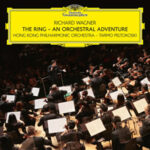
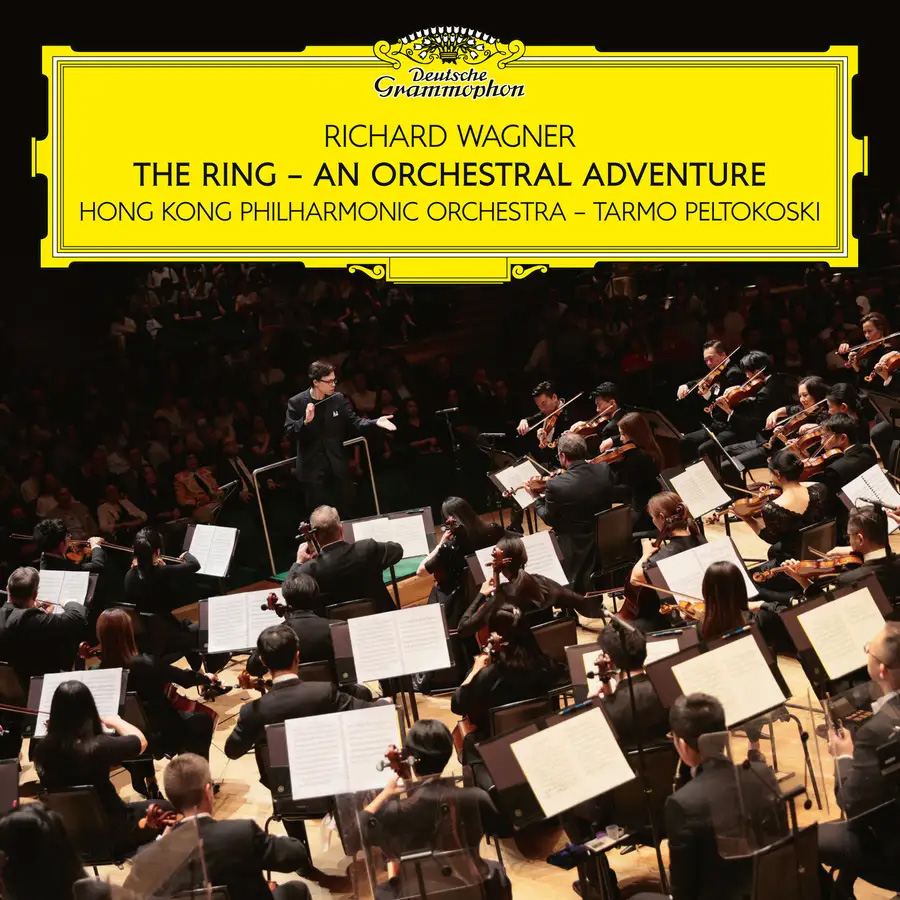
On March 20, 2026, Deutsche Grammophon released another Wagner The Ring recording of note, of a performance made on June 28, 2025 by the Hong Kong Philharmonic Orchestra, conducted by Tarmo Peltokoski. The title is The Ring – An Orchestral Adventure. Neither the conductor nor the ensemble is well known in the international circle although the HKPO’s regional clout, I understand, is considerable. As in a majority of art institutions, prosperity of organizations such as the HKPO relies heavily upon the level of wealth of the society’s upper class. A financial hub of Asia since the Seventies, Hong Kong enjoyed vast inpouring of human and financial resources from the United Kingdom and China. Many pivotal Hong Kong organizations to this day continue to bolster British senior management, and the HKPO as an ensemble of western music stands to benefit and prosper. The HKPO website features a “Watch & Listen” portal featuring many live concert performances; its HKPhilharmonic YouTube channel boasts 17.2K subscribers and 291 videos for a local population of some 8 million, many of which are of complete symphonic works, ranging from a 57:10 Mahler Symphony No. 1 to a 49 minutes and 27 seconds long Rachmaninoff Piano Concerto No. 2. Guest conductors featured includes Vasily Petrenko on a Rachmaninoff Symphony No. 2 to Paavo Jarvi on a 17:18 Rimsky-Korsakov Capriccio Espagnol.
This particular recording of Wagner’s Ring cycle is based on a complete rearrangement by Dutch composer Henk de Vlieger in 1991 of the fifteen hours Wagner Der Ring des Nibelungen cycle into an hour-long orchestral feat. There are three other similar recordings in current catalogs, all play to around 60 minutes; this DG release contains four additional “single edit” tracks of around 21 minutes, totaling 88 minutes. The unique merit of this release is the degree to which the record label is able to capture the musicianship of the ensemble and the quality of the recording.
None of the previous recordings, sans the aforementioned 2022 Andris Nelsons cycle, sounds as extended, dynamic and fresh as the subject of this review. For instance, the rendition of “Trauermusik” at track 13 is the most pervasive I’ve experienced to date; its recording captures even the harps on the far left, and the horns are directed to sound off at such musical intensity and reproduction resolution that I felt my blood boiling at the go. I didn’t know the musicians at the HKPO play at such level.
Then, there is the buildup to “The Valkyrie” from track 4 to track 5, which commences on continuous progression with no break, and the excitement is palpable. Vlieger’s arrangement calls for a non-stop, continuous playing and it is far more satisfying to experience than any four-movement symphony that comes to mind. Next, all the while we are carried along through the music comes track 12, “Siegfried’s Death”, one of the most memorable moments of all of Wagner’s music, and what a goosebumping jolt to the psyche it is the way the musicians of HKPO rendered it. There is tremendous energy being released, on account of not just the expertly playing but also the immaculate sound of DG circa 2026. And the whole experience goes out with a satisfying bang with track 14, “Brunnhilde’s Sacrifice”.
Sure, we have the Strauss tone poems but this one runs for an hour! And the mood is sustained throughout sans the typical movement changes in symphonies. Why there are only a handful of recordings of this baffles the mind. We are perhaps living in the century of short attention span, and this recording is the antidote.
The HKPO flaunts its unique blend of high-energy playing with top-tier control and fluidity. The opulence of the Deutsche Grammophon recording is such that as if instruments willed are of renown origins. And audiophile moments abound. The crux of all this is the fact that this is a Wagner creation, choreographed into one dynamic piece full of intensity and vibrancy. One couldn’t ask for a more evocative orchestration.
In fact, the highly disciplined and measured playing of the HKPO reminds me of the Berlin sound, one of dispassionate ease but utter precision and unrelenting flow in playing. It’s like watching Jascha Heifetz of late versus the rest, you won’t see the slightest flinching on his face while he performed the most astounding feat, but the musicianship is first-rate. The result is a work of reference at such extent allowing the audience from which to draw emotions.
Vlieger also rearranged Wagner’s Parsifal in 1993 and Meistersinger in 2005, and there is the Tristan and Isolde “Prelude” and “Liebestod”, and many others. I desperately want to hear what the HKPO and DG can do next, and let’s hope this release gets successful enough for them to continue recording.
Review system
Audience AV frontROW cable system
Cardas Clear Beyond cable system
Aurender N200 cache player
Bricasti Design M21 DSD DAC
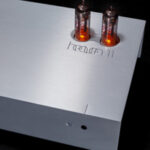
Atma-Sphere MP-1 3.3 tube preamplification system
Pass Laboratories XA200.8 class A monoblocks
Orchard Audio Starkrimson Mono Ultra Premium GaN-FET monoblocks
Sound Lab M945 electrostatic panels
Acoustic Science Corp. Tubetraps
- (Page 1 of 1)