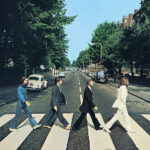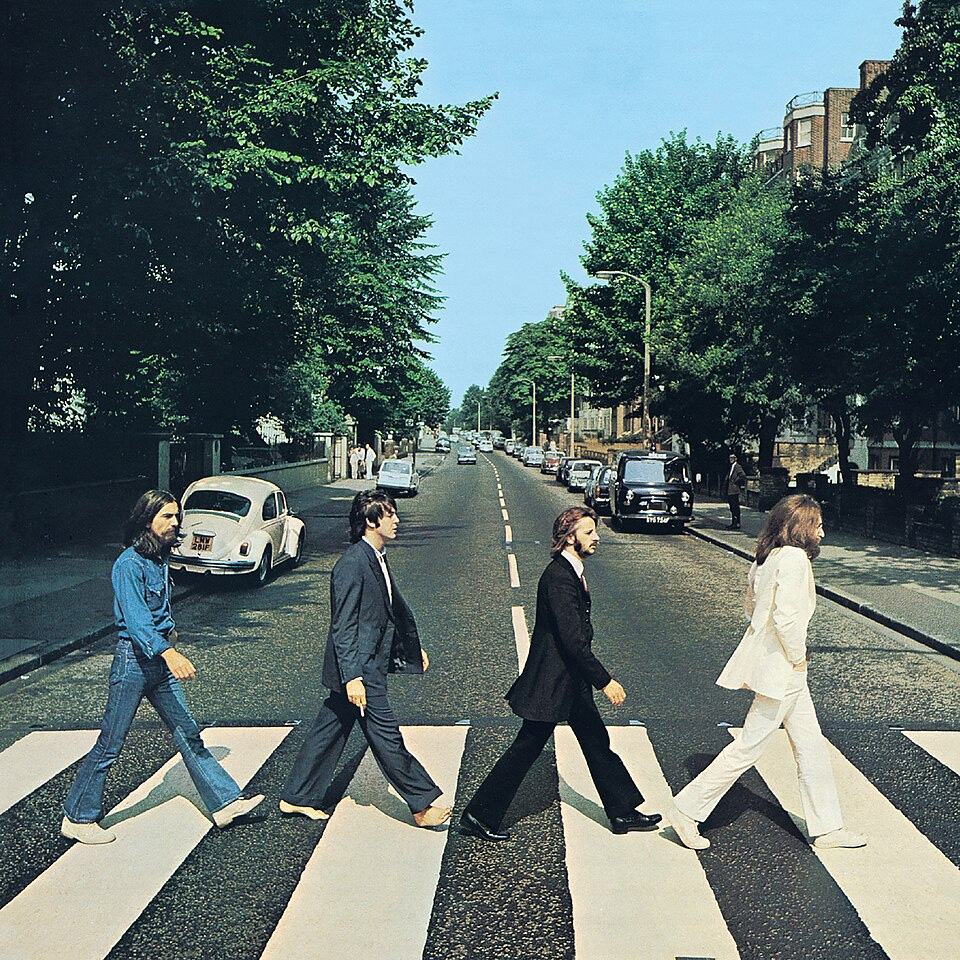
Abbey Road (1969)
Introduction (Earl Weed)
“I remember the first time I heard the Beatles Abbey Road. I would have been 15 years old in 1969, when it came out. One of my friends played in a band with a guy who had a reel-to-reel tape machine in his bedroom, and that fellow also had a reel-to-reel copy of Abbey Road. Of course, in 1969, reel-to-reels were quite magical – the ne plus ultra of audio resolution. So, several of us gathered in his bedroom after band practice to listen. And the recording seemed to us quite remarkable…or was it the reel-to-reel? In any case, over the years after I first heard it, Abbey Road became a lodestar, a cap to living through the 60’s, musically, and more broadly. This was especially true of Side 2, with its incredibly inventive medley put together by Paul McCartney and George Martin.
I’ve been curious for some years now about how the different pressings of Abbey Road might compare, starting with pressings close to the original release date, which are legendary in some quarters, and thereafter, including the Mobile Fidelity pressing from the 70’s, which I bought when it first came out, up to the later EMI pressings out of the “Blue Box”, and then against the, relatively, recent masters done by Giles Martin out of the digital era. I figured out recently that earlier pressings were not nearly as expensive as they once were. So, I bought a couple of them to check out against other pressings that Fred and I could come up with collectively.”
(Fred Crowder)
With the explanation above, my friend Earl proposed that we do a shoot-out of various of the Abbey Road pressings and jointly construct a review. If we’d arrived at dramatically different conclusions, I wouldn’t have agreed. But arriving at a consensus was not difficult, so here we are. What we listened to and compared were: a UK Apple pressing from around 1969-1970; an Apple pressing from 1975, which was identified by a blogger on Steve Hoffman’s site as having come after a remastering of some sort; an EMI/Apple pressing from the “Blue Box” – a box of the complete Beatles LPs from the mid-80’s; the Mobile Fidelity pressing mentioned above, which Earl bought in the late 70’s; and, finally, the Giles Martin remastering, which Earl acquired for the purposes of this shoot out, and which appeared in 2019.
(Fred and Earl):
Abbey Road – A bit of background:
First, a few pertinent comments about Abbey Road. Abbey Road was the second-to-last of The Beatles’ releases. However, it was the last recorded – the tracks for what became ‘Let It Be’ were actually recorded earlier – and in a different studio altogether – but were released later in order to coincide with the release of the documentary ‘Let It Be’, which hadn’t been edited by the time Abbey Road was ready for release.
Wikipedia is an excellent source of information about Abbey Road, as is the book which comes with the Abbey Road Anniversary Edition from 2019. (That reissue contains CDs of the 2019 remix, along with outtakes, and a DVD version of the remix.)
For starters, it is useful to know that Abbey Road was recorded on a new 8 track tape machine and mixer at Abbey Road studios as opposed to 4 track machines previously used. It was also the first solid state mixing desk the group had used. Reportedly, the mixing desk was markedly superior to previous desks used and allowed for greater mixing capabilities than before. The Beatles had certainly pushed the envelope in terms of recording technologies during past albums. In the case of Abbey Road, the technology seemed to have caught up with their needs. Indeed, following our listening sessions with Abbey Road, we did some listening to Sgt. Pepper’s, Magical Mystery Tour, and Revolver, all of which at times seemed to suffer from the technological stretches brought about by the band’s imaginative needs – particularly in the area of overdubbing. Which is hardly surprising, given that they were stretching the limits of 4 track technology when piling on multiple tracks, as they were increasingly inclined to do.
In our listening sessions, we focused primarily on Side 2 of Abbey Road. This side begins with one of George Harrison’s very strong contributions, ‘Here Comes the Sun’, which was followed by ‘Because’, a John Lennon contribution that features nine layers of vocal tracks, and a substantial role for synthesizer, largely new to the band’s palette. The remainder of the side is given over to a medley of songs, or snippets of songs, largely stitched together by Paul McCartney and producer George Martin. The story of the making of Abbey Road is much more complex, of course, and is well-told, particularly in the book that comes with the Anniversary Edition.)
Altogether, these songs, along with the medley, contain an extremely rich palette of instruments and lead and harmony vocals that, in variety and density, are both pleasing to the ear (even over a long listening session) and challenging to the audio equipment involved – at both ends of the spectrum: production, and reproduction. A partial listing: Multiple lead and harmony vocals; multiple acoustic and electric guitars along with their various amps and effects; drums with new tom heads (to Ringo’s great happiness); various keyboards, including electric harpsichord (George Martin) and organ (George Martin again); assorted other percussion, including groups of hand claps, tubular bells, tambourine and maracas; a string section, plus clarinets, flutes, alto flutes, piccolos, trumpets and trombones; and then not only tape loops of “found” sounds put together by Paul, but EMI Sound Effect Reels of crickets and “Jungle Noises.”
Before presenting our comments about the sounds of the different pressings, two things seem worth noting: First, Abbey Road is a terrific-sounding recording. While we developed distinct views about the “happiness level” provided by the various LPs, all had value – and Abbey Road is the sort of recording that is going to sound quite pleasing even on a car stereo or boombox.
Second, we both grew up with this record, and heard pressings of it – if not on particularly good equipment – as early as 1969 (possibly), when it was released. While we have trained ourselves to listen objectively, it goes without saying that there may be some historical preferences that play a role here.
With all that having been said, here are our comments about each of the pressings we listened to:
U.K. Apple Pressing (circa 1969-1970):
The sound of this early pressing is certainly quite excellent, in spite of a bit of surface noise that seems inevitable with a popular record of this age. There is a peculiar and particular quality to Ringo’s snare and cymbals that seems unique to his recorded sound at this time. It is very difficult to describe – Earl would call it a trebly ring, in the case of the snare and the high hat. The toms do not have a lot of ring to them, but they sound very solid and well-tuned; their newness, perhaps. The drums in general are very effectively mixed, not overly loud, yet fully present. We both liked the sound of the drumheads, and the cymbals. They are very coherent.
The vocal choirs are very clean, clear, and present. Forward enough that the individual voices are in many cases easy enough to attribute to individual members. John’s voice, in particular, is very identifiable, with a warm growl to it, whether in harmony or solo. From looking at pictures from the studio, it appears likely that they were using tube microphones, which can enhance the warmth in that way. Earl, having recorded with some tube-based Neumann’s, is fond of claiming that “they are so good, they make me sound like Frank Sinatra.” Which, with due respect, is surely absurd…
Stereo spread is beyond the speakers, yet with a full center fill. In that way, among others, the mix is terrific, making it easy for the speakers to disappear. Balance among the instruments is very well-judged. There are lots of instruments in the mix at various times, which means the listener will be unable to hear every detail of every instrument (of course) – the judgment used in balancing out the tracks was really terrific, especially in these relatively early days of multitracking. Of course, the quality of the mastering and pressing play their roles here as well. And the cricket effects that swirl around at the beginning of ‘Sun King’ are perfect.
U.K. Apple Pressing (circa 1975):
The sound of this pressing is fairly close to the earlier pressing, except in three respects: a little more detail than in the earlier pressing, particularly in the top end; somewhat greater presence in the bass guitar; and a somewhat more forward-seeming presentation overall. At times, in fact, the bass could be right at the edge of too much, such that it almost overcame some of the top end detail, although at other times it might have more effectively underlined the proceedings. The slight additional detail enhances certain instruments in particular, such as the synth in ‘Here Comes the Sun.’ At other times, different effects became more obvious, such as the multiple clapping hands in the same tune. The characteristic snare sound that we liked from the earlier copy is still there, happily.
Overall, as noted, the presentation is a bit more forward than the earlier pressing, which may be what gives the impression of more detail. The vocal choir in ‘Because’ is still breathtaking, but one might have to work a little harder to identify individual contributors. Nevertheless, the overall effect is very sexy.
It might be fair to say that the earlier pressing is more tubelike and the ‘75 pressing is a little more transistory/ hi-fi – though not much. And it might, in fact, be the case, given that record labels were, in these years, gradually transforming their gear from tubes to transistors, the latter being viewed, at the time, as more accurate, and better able to handle more complex material. The record was no doubt re-pressed multiples times in the years 1969 – 1975, and it stands to reason that the equipment involved changed. We have come across one report that the record was remastered before the ’75 pressing as well but have not confirmed it.
As between the two pressings, it would be hard to complain about either. The sound in the earlier pressing seems a bit meatier, overall, while the ’75 pressing has some pleasurable extra detail, but the difference is not night and day, by any means.
K. Blue Box Pressing (circa 1985):
In 1978, EMI/Parlophone issued a boxed set of all The Beatles’ albums, which became known amongst collectors as the “Blue Box.” It was re-pressed multiple times up into the mid-80’s. The Blue Box from which our test copy came appears to have been pressed in 1985.
The overall sound of the ’85 pressing is still very good. It is the most focused on detail of all the pressings surveyed, to an almost clinical degree. It also seems to have been mastered at a somewhat lower volume level. Once we adjusted for the difference in volume, the sound was somewhat more natural than it seemed at first; however, the overall thrust of the tunes could sometimes seem to get lost in the detail. For example, the vocal chorus in ‘Because’ was terrifically detailed and forward, but not quite as individually rich and sexy as the previous copies. Additionally, the sound of the drums was not quite as satisfyingly warm and rich as in the earlier pressings, not as faultlessly coherent. We could come up with additional examples, but overall, the ’85 pressing was somewhat less satisfying than the earlier pressings. However, whether or not the difference was noticeable would depend upon the equipment on which it was played.
Mobile Fidelity Re-issue (1980):
Ultimately, Mobile Fidelity reissued, essentially, versions of the entire Blue Box described above, in 1982. However, the first reissue was issued in 1980. Earl’s original 1980 copy is the copy we used for listening. One issue that is not clear is whether Mobile Fidelity used master’s from Capitol Records or from EMI/Parlophone.
Overall, this Mobile Fidelity version of Abbey Road is fairly much different from the EMI versions listened to so far, somewhat less forward and somewhat less immediate. In the chorus on ‘Because’, it is harder to differentiate the individual participants. The detail of the synths is there, and the overall feel is fairly warm. The chorus, and everything else really, seems a little further behind the speakers. We can imagine that when this came out, it might have seemed more detailed to some listeners on hi-fis of the day, with more delicacy, because of its overall reticence. However, now, this pressing seems less fun than any of the pressings previously discussed. It’s not that it is missing anything exactly. It just does not reach out and grab one by the ears and make one want jump and move, as Earl puts it, although I can hardly call my friend’s no doubt jerky movements as amounting to dancing, but you know what we mean. It is flatter-seeming, less involving than the prior pressings, although it can hardly be considered “bad.”
Abbey Road (Giles Martin remastering, 2019):
The newest remastering by George Martin’s son Giles was cut at a lower volume than some of the others but once the volume was adjusted, it had more bass. Detail was very good, in some places superior to prior pressings. In comparison to the Mobile Fidelity pressing, for example, the new version was much more immediate and had some of the excitement of the earliest pressings.
Some examples of the positives, along with a few negatives: The chorus in ‘Because’ is spread further across the stage than we typically encountered, which was sensually pleasing. However, the voices seemed somewhat less differentiated. For instance, it was harder to pick out Lennon’s unique voice, particularly as compared to the ’69-’70 or ’75 pressing. In other words, the chorus seemed more homogenized. As expected in this remaster, some balances have been tinkered with/adjusted. The guitar in ‘You Never Give Me Your Money’ seems somewhat buried into the right channel which, for someone raised on the original mix, seems a little odd. And later versions of the harmony voices are again somewhat homogenized. The drum sound that we liked on earlier pressings (mildly peculiar as it may have been) seems to have lost some of its character. Again, more generic, less Ringo – at least for us old-timers.
Finally, over time, we began to feel some listening fatigue with this copy that we sometimes associate with digital mastering, although it happens with pure analogue as well. Was this simply the fatigue that seems inevitable over a longer than normal listening session? Or an artifact of the process? Not sure.
Listened to in the car or on a lesser system, the new mastering would be fine. The same could also be true if you were unfamiliar with Abbey Road in general. However, if you know the record and have heard the earlier full analogue versions on systems with a good bit of resolving power, you might well be disappointed with this version.
Conclusion
First, it is very much worth saying that Abbey Road is such a strong piece of work that it held up quite well over multiple hours of listening. Most of us would not likely doubt that, although reviews at the time, as quoted in the Anniversary Edition, indicate that all was not well with the critics upon initial release. Of course, The Beatles developed with every album, especially from about 1965 on. If a critic was looking simply for more of the same, for the familiar, that critic was headed for disappointment.
Of course, if you’ve read this far, you are most likely a serious fan of the album. And, for those serious fans who have some patience and the right hi-fi gear, we believe that finding an early pressing of Abbey Road would be worth the trouble. Whether the pressing is ’69-’70 or in the ’75 range, the ears will be rewarded, for all the reasons discussed above. You will be hearing – relatively speaking – what the makers of the record were looking to present at the time “Abbey Road” was created.
At the same time, one would be well rewarded by tracking down a copy of the “Anniversary Edition” with the 3 CDs and Blu-ray mentioned above, plus the hardbound book, all of which is in a presentation slip-box. The book is an absorbing read. And this would give the serious “Abbey Road” addict the opportunity to compare the sound of the early pressing with the 2019 pressing, plus the additional work-in-progress tracks.
As to the issue of how to identify early pressings of Abbey Road, this is of a level of complexity that is well beyond the scope of this review. In short, from our perspective, a serious and reliable vinyl vendor would be the way to go.
- (Page 1 of 1)