The following is an interview of Jarek Waszczyszyn, founder and chief engineer of Ancient Audio of Poland.
Also see the companion article of the Ancient Audio Lektor Joy CD player/DAC/preamp Review.
Q: Please tell the readership your background, how you came about the name Ancient Audio, and one or two of the most pivotal moments in the history of Ancient Audio.
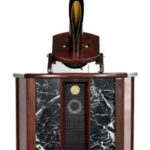
A: I was returning home from high school one day and I stopped by a second hand /pawn/ luxury goods shop. Poland was a communist country back then. Wrangler jeans costh $12, LP $9, CD $12. Monthly salary was 10-12 $. These visits were pure platonic, just window shopping, the merchandises were out of range of the average Pole. Goods from another planet. But that day was special. I had seen a Transcriptor Hydraulic Reference turntable. I was shot. I was watching it like the Garfield cat was watching a full, open refrigerator. Or like truck driver, watching Dolly Parton in bath. I had seen an unity of fine arts, utility arts and audio device. It was Hi-End. By the way, this turntable was famous, presented in the movie Clock Work Orange . The only way to touch this desired player was to make replica by myself. The sound of the replica was horrible, but the look was quite nice.
So, my music and electronics passion was given wind on sails.
After graduation, I became a tutor at the University. I had the luck of working in two of the best teams. In 1987, we made the first fibre optics Ethernet network in the communist block. In 1993, we made digital fibre optics link for broadcast TV, the third company to do so worldwide. (Poland became a democracy around 1990. -Pub.) The speed of this link was 300 Mbit/s. A CD data stream is just 1.4 Mbit/s. So, you can imagine how advanced a system it already was. It accorded me excellent understanding about digital audio and high speed optical data transmission.
I grew up in a science/art family. My father was professor of computer methods in mechanics, mother was historian of art. She was the director of Orient Art on Royal Wawel Castle museum. I frequently visited her at the castle. It was a natural education of art. Once, in secret I went into the chamber to sit on the polish king’s throne. Just 10 seconds, I felt like King of Poland. Of course, it was absolutely forbidden.
All the art and history has made me appreciate roots of western civilization, and I was fascinated about Ancient Greece to this day. So, on one hand I was involved in the most advanced technologies, on the other a deep appreciation of the old school heritage. Working at university enabled me to develop my audio passion with advanced electronics knowledge. Like many audiophiles of ’90, I then became fascinated by vacuum tubes. I made hybrid, tube-transistor amplifier, as my first serial product. Both technology and look were of the old school type and gave rise to the name of company: Ancient Audio .
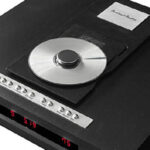
Having a solid digital and optics electronics foundation, I focused on CD and players. I had only one problem…how to match this contemporary technology with old school look? The classic vinyl or even shellac turntable was the missing link. So, my CD players has open CD architecture during play. It reminds one of a classic turntable.
The first Lektor CD player had glass doors, to cover the CD. Lektor II, made on stable, granite base, was introduced in 2002, with totally open CD compartment. It was a similar solution to famous 47 Labs players from Japan.
In 2005, I introduced the Lektor Grand, the world’s first 3-piece CD player comprising a transport and two mono DAC’s. With vacuum tube output, it was called analog-sounding, and was named one of four best players on the market. Together with the Silver Grand Mono amplifiers, also called the best sounding amp to this day, these devices established the company’s reputation.
Q: Most other manufacturers utilize only one ESS chip for both channels. What prompted you to use two chips, what are the difficulties involved in using two?
A: The ES9038Pro has 8 D/A converters inside, which can be set in many modes. For example, it can operate in 7.1 multi-channel , where each D/A converter is feeding one channel.
In stereo mode, there are two groups, by 4 D/A converters, connected parallelly. Most manufactures uses it, and I also use this mode in my more affordable players like the Lektor Fun, Lektor Step, Lektor 30 Anniversary. Connecting two converters in parallel decreases the noise level by 3 dB. Connecting four, 6 dB.
Lektor Joy is the flagship player. I use two chips in it, each in mono mode, where all 8 D/A converters are connected parallelly. That decreases the noise floor by a whopping 9 dB. Additionally, the power supply and ground are complete separated for the left and right channels. This arrangement gives improving sound quality of player. By the way, same solution as well as the same CD-Pro8 drive are in the Gryphon Ethos, direct competitor of Lektor Joy, however two times more expensive.
The dual chips has its own issues. First, there are the most expensive chips on market. Also, it needs another control software. It was easy for me, because all software for Lektor Joy was custom created to control the CD drive, display and D/A chips. It was also necessary to facilitate Joy’s unique clock system. Usually, CD players has many separate clocks for the CD drive, display, keyboard, D/A. In the Joy, only one clock exists. It is a precision unit made by Tent Labs of Holland to control mechanism, display, keyboard, remote. So, it doesn’t produce interference between clocks, and hence less jitter. Both hardware and software of the Lektor Joy were created differently than most Hi-End players.
Q: Could you share with the readership the noise figures of the Lektor Joy, as well as that of the Lektor 30th Anniversary? In addition, what are the reasons for not adopting an SACD drive?
What are the reasons for deactivating the DSD decoding on the ES9038PRO?
A: The noise figure for the Lektor Joy is less than -100 dBA, below the measuring equipment’s resolution.
Measures of CD players are completely unrelated to sound. I spent 6 years during my job at Institute of Electronics to find any serious relation, by many complex measures. Traditional measured errors are much below human hearing resolution, for example frequency response 20 Hz-20 kHz +/- 0. 2 dB, or THD 0.002 %. But audible differences are really big. After 6 years, I found a special test signal, and wavelet transformation signal processing, showing that differences of 5-6 dB between players are very big, but there is no correlation between sound and measurements. These research became my PhD thesis.
I adopted the CD-Pro 8 drive because it is the best available on market, solid in mechanical properties and excellent sounding. And with stable delivery, stable quality, stable service. So, I focused on the best possible CD retrieval. Also, the most interesting music is available on CD only to this day.
Furthermore, most of my players can be equipped with Digital Speaker Processor. And, any post-recording editing and processing, even just volume change, cannot be done on DSD signal but PCM. All contemporary records are recorded on PCM, then after editing, mixing etc. they are converted to DSD.
Q: Before I move onto non-digital aspects of the LJ, can I ask you about your thoughts on companies still insisting on using the Philips TDA1541 chip?
A: The absolute sound is the peak, which engineers try to achieve by different methods. Which is the best ? Of course, we can see and listen, who is the closest to the peak, who is closer to the sound of vinyl record, perfectly imitating live music.
So, there are amplifiers basing on 1940s vacuum tubes and amplifiers using 2025 solid state technologies. There are 1960 Ampex tape recorders, and the 2024 Lektor Joy CD player. There are 1954 Tannoy Westminster Royal, and 2024 Magico. What is the best ?
One of my customers uses custom speakers made of vintage Altec drivers and metal horns. These parts were made maybe in the 50’s. Sound was amazing, with dynamics, space, air, colors.
The same is with the TDA 1541. Some creators use it without digital oversampling filter, but with analog low pass filter. Demands for this filter are extremally high, which has very sharp rolloff, and have aperiodic response. The analog filter, extremely difficult to design and tune, but when accomplished in both channels is key to good sound of TDA 1541, as long as it is in pure, not oversampling, mode. Its sound can be very well if made by master, or awful if made by beginner.
Most designers and chip suppliers, like me, prefer the other route, such as complex chips with very sophisticated digital processing for the relative ease in serial duplication. For example, the ES9038PRO has 8 digital filters, 32 bit resolution, and probably even more accurate processing than others. So, it can minimize side effects of early oversampling filters.
However…there are many players using the ES9038PRO chip. Some are lazy, some are too nervous. Why ? It will be the next chapter…
These same cases applied towards the 300B amplifiers. They are simple as umbrella, as all tube amplifiers. The difference is in details, like speaker transformer, capacitors, wiring. But the real key to good sound of tube amplifier is the power supply, particularly in the Single-Ended Triode mode. SET amplifier receives current in one phase of signal, and sending current in the next. The best tube amplifiers play without feedback, both global and local. Suh is the case with the Silver Grand Mono. So, power supply must be perfect. Finally, power supply of Silver Grand Mono is key of its sound. Its power supply uses 20 times more components than most solid-state amplifiers.
Q: Could you provide some technical details on the linestage?
A: The output stage, or analog stage is an underestimated part of CD player. Most people are focusing on DAC, not as mindful about complete chain of signal path.
Ancient Audio produces very high quality amplifications. So, it was a natural advantage to empower CD player with variable output to drive the power amplifier directly. In that case, output stage was de facto preamplifier, with ability do deliver lot of signal to drive cables and low sensitivity devices.
Fashions exist in technology, not only in hairdo, clothes, or handbags but also CD players. Some time ago , upsamplers were in fashion, as well as vacuum tube output stage. It was an attempt to make sound of first CD players softer, more “analog like”.
As a beginner designer, I tried to put vacuum tube into CD players’ signal path in the typical application, meaning a cathode follower. Results were disappointing with lot of complications, achieving only minor sound improvement. Yes, the sound was softer, but in the wrong way because dynamics was limited. After many trials, it was clear, that 100% negative local voltage feedback device can produce more side effects than positive ones. So, I applied local current feedback. Older generation of engineers knows it very well, because it was a solution used in oscilloscopes. Oscilloscope amplifier must give gain, without any side effects, to show signal as is original. I applied this solution for then Lektor II CD player.
The result was surprising! On one hand, the sound was unchanged at high frequencies, but impact, and instrument positioning were much better. Appropriate application of vacuum tube gave effects opposite to just “soft”. It led to the birth of Lektor III, and all the generations of Ancient Audio CD players. Initially, the 6DJ8/ECC88 double triode tubes were adopted, then the Russian 6H30. This tube, created as driver for military radios, had low output impedance, and high current capabilities. It became the signature of all Lektors. This tube has no equivalent in western production.
In the design of the Lektor Joy, the current flagship player, I continued using this well-established tube. But, in that time Russia invaded Ukraine. It was an earthquake-like shock to almost all aspects of life in Europe. It became clear that a new solution was needed. The main circuit reminded same but the vacuum tube was replaced by MOSFet, semiconductor with similar, voltage drive. It was already used in the Ancient Audio Silver Phono preamplifier, so it was no problem to put it into the flagship CD player.
In comparison, we had a prototype using double circuits: the 6H30 vacuum tube, and the new Mosfet. They could be immediately switched during play. I asked my friends with golden ears to vote on the solution they like, and they couldn’t tell which is which. They pointed to subtle advantages, such as more shadows in high frequencies. It was surprise, because they preferred the MOSFet solution.
For the final output stage, it can deliver up to 15 Vpp on RCA outputs, or 30 Vpp on XLR, what means the ability to drive every power amplifier. Additionally, the output stage has variable gain, set by a rear-panel switch of the CD player for an additional 10 dB gain. This can be very helpful especially when the Digital Speaker Processor is installed, because the processor has 10 dB gain loss.
So, the output stage of Lektor Joy is rather more similar to tubes than solid state, even it is silicon-based. Output capacitors are now necessary. As in previous Lektors, I use excellent ODAM capacitors, made in USA by Chris Venhaus. These are oil impregnated capacitors. In the past, oil was used to improve insulation and heat exchange in power capacitors and transformers. But in Lektor Joy, oil is kind of a delicate filter, removing high frequency noise after high speed D/A conversion.
As I wrote before, vacuum tube circuits are very simple but needs perfect power supply. Lektor Joy has independent symmetric power circuit, to supply the output stage. In that case, it was necessary to attain not only perfect stability, but also extremally low noise, even lower than the typical solid state or opamps units. Classic solutions, such as the uA 7815 / 7915 had one hundred times higher noise than required, and complex pulse response. So, another proprietary solution, adapted from the Silver Grand Mono amplifier, was applied. As a result, this completely linear power supply, with separate toroidal transformers for CD transport, and audio section, plus high gain and class A single-ended MOSFet output stage, consumes the most power of the entire CD player. The result is excellent sound.
END
- (Page 1 of 1)