 The advent of broadband internet gave rise to server-based online music streaming, and yet its popularity is unsustainable as the Boomer audiophile base see the infinite subscription not returning newer, better Seventies and Eighties music to which they’ve been listening. Consider the hoard of discs many of us accumulated throughout the decades, and the ones discarded by many other of us are now available en masse on eBay and the likes. CDs, when kept in their jewel cases and away from heat sources, will truly stay playable like the first day. Now, no need to despair if you have chucked all your collection for streaming, because CD-Rs are easily created and in many cases they sound better than the commercial ones because they exhibit superior adherence to the disc centering protocol demonstrably.
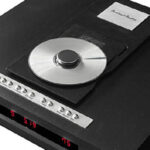
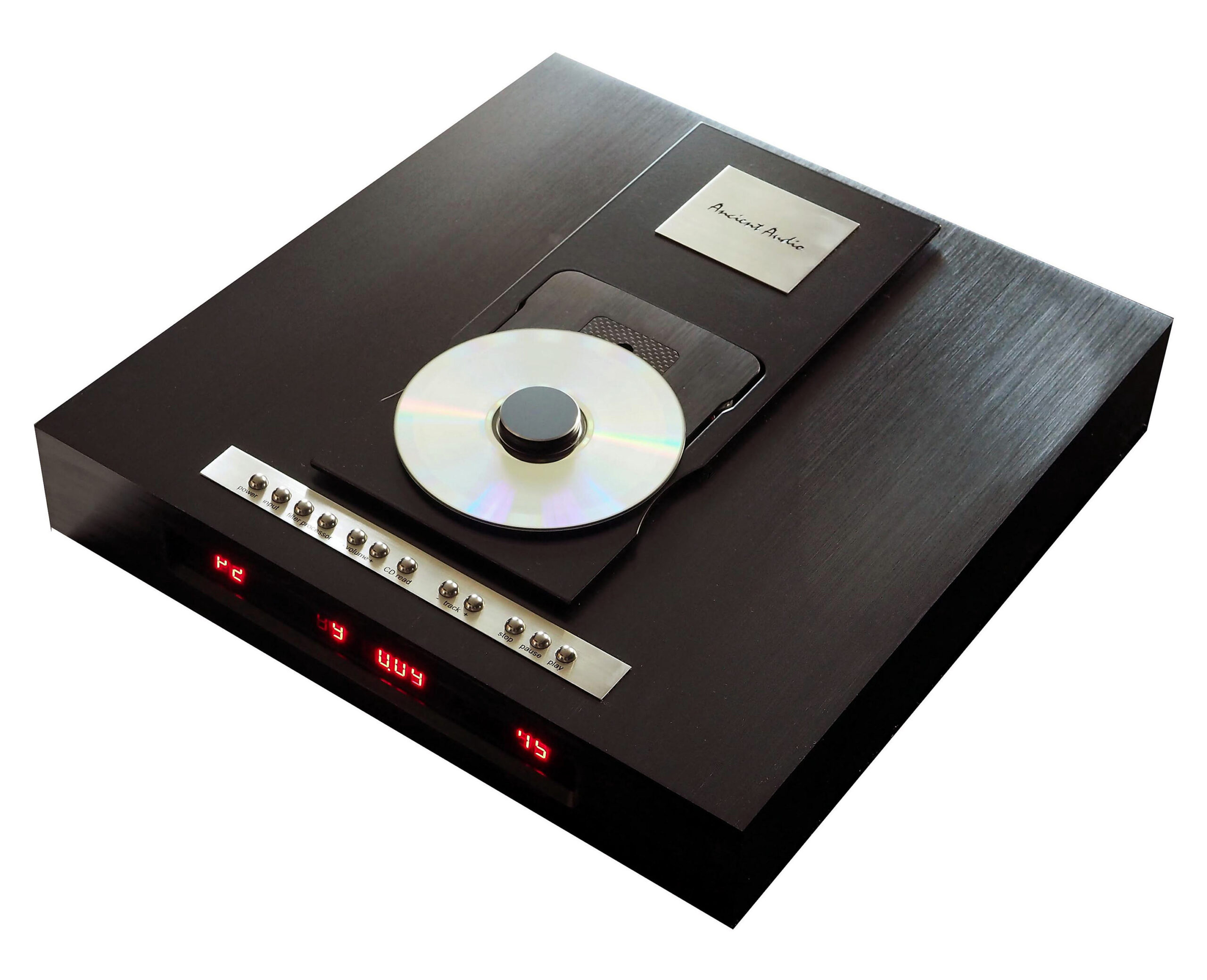
This review looks at an offering from Ancient Audio of Poland, namely the Lektor Joy CD player. The digital speaker processor circuit is not activated for this review.
Ancient Audio has six products, the flagship being the $76,000 Silver Grand Mono II parallel single-ended triode monoblocks. The rest of the product line are all digital players, from the $26,400 Lektor Joy, the subject of this review, to the $17,200 Lektor Fun CD player/DAC/preamplifier, the $13,200 Lektor Step CD player/DAC/preamplifier/processor, the similarly priced Lektor Transport CD transport, and finally the $9,200 Lektor 30 Anniversary CD player/Preamplifier/Processor. The Lektor Joy and the Lektor Transport are the two models among the six digital players constructed of a single solid block of aluminum; the others are given glass and aluminum enclosures. The optional feature of digital speaker processing is not installed on the review unit.
Flaunting a relatively compact physique, the Lektor Joy is nonetheless heavy, being constructed of one aluminum block, ladened with multiple transformers, banks of premium capacitors and a considerable slab of transport mechanism. For the LJ utilizes the conventional reading arrangement of loading the CD onto the spindle and stabilized lightly with a magnetic cap. The reading mechanism is dubbed StreamUnlimited CD-pro8, designed by Austrian company SUOS-HiFi GmbH, a company founded by ex-Philips engineers in 2006 as Stream Unlimited Optical Storage before the rebranding in 2024. It is further tuned by Anicent Audio for the Lektor Joy. The same standard transport mechanism is also featured most notably in the Gryphon Ethos, Accustic Arts Drive II, among others. The StreamUnlimted CD-pro8 is considered the successor to the Philips CD Pro 2, a widely revered design discontinued in 2012.

The Lektor Joy sports two ESS Technology ES9038PRO Sabre 32-bit HyperStream II chips, one for each channel, and decodes signal up to 32-bit 216kHz via the USB 2.0 input, far exceeding DSD resolution, which itself is already surpassed by audio files at 24-bit 192kHz. Yet, the Ancient Audio does not decode DSD files, nor 24-bit files at 176kHz, producing white-noise sourcing from Aurender N200 cache player on both occasions instead of auto-muting. It is therefore prudent to lower the volume first so that blasting white noise won’t result should you try to play files of sampling frequencies outside of the player’s specifications. Company owner Jarek Waszczyszyn believes this white-noise generation is the result of specific incompatibility between the Aurender and the Lector Joy. Additionally, the company recommends downloading the Amanero drivers software for playing via computers.
On this, Jarek:
“I made some tests with Joy, and DSD data, it took me some time.
Joy uses chip Crystal Semiconductor CS 8422, for all incoming digital signals. This chip decodes PCM signals only. In case of any signal imperfections, it automatically mutes signal to prevent noise. I tested it many times, with different devices. This muting works fine.
So, only source of problem can be USB module, connected via S/P DIF . I use excellent, classic solution from Italy, Amanero Combo384SE. This module should not send any signal in case of DSD data, here is fragment of description https://amanero.com/site/combo384.html
Features – Combo384SE
- Variant of the classic Combo384 interfacing USB Bus to PCM I2S/DSD devices with options for PCM S/PDIF.
- S/PDIF chipset: WM8804 that works as transmitter or receiver.
- TX Mode: S/PDIF output supports 192kHz; a dedicated connector with 75 Ω impedance outputs a capacitive isolated digital signal; PCM data from USB is available simultaneously on the I2S and S/PDIF output connectors; when PCM 384kHz or DSD streaming is incoming, the S/PDIF output is muted.
So, based on documentation, it should be no noise , playing DSD by Joy’s USB input. I checked it at my friend’s computer, he likes both PCM and DSD files. We connected Joy by USB. All was working fine, means it was excellent music on PCM, and silence on DSD.
Why could you have this phenomena?
- (Page 1 of 3)
- Next page →